

AI Cybercrime South Africa: What the New Wave of Attacks Actually Looks Like
The email arrived at 8:47 on a Tuesday morning. It looked like it was from the company’s bank — the same logo, the same tone, the same sender name the finance manager had seen dozens of times before. It asked her to verify a transaction before end of day. She clicked. Within six minutes, the attackers were inside the network, moving from system to system. The data was gone before the IT department knew anything was wrong.
This wasn’t a sophisticated, months-long operation by a well-funded criminal organisation. It was automated. An AI tool wrote the email, tailored it to her company’s context, and sent it as part of a campaign targeting hundreds of businesses simultaneously. AI cybercrime South Africa is no longer a future concern — it is happening right now, to businesses of every size, across every sector.
This article explains how criminals are using AI to run faster, more convincing attacks — and what it means for your business specifically.
How Criminals Are Using AI Right Now
The shift AI has brought to cybercrime is not about making attacks more complicated. It is about making them cheaper, faster, and far more convincing — and removing the need for technical skill entirely.
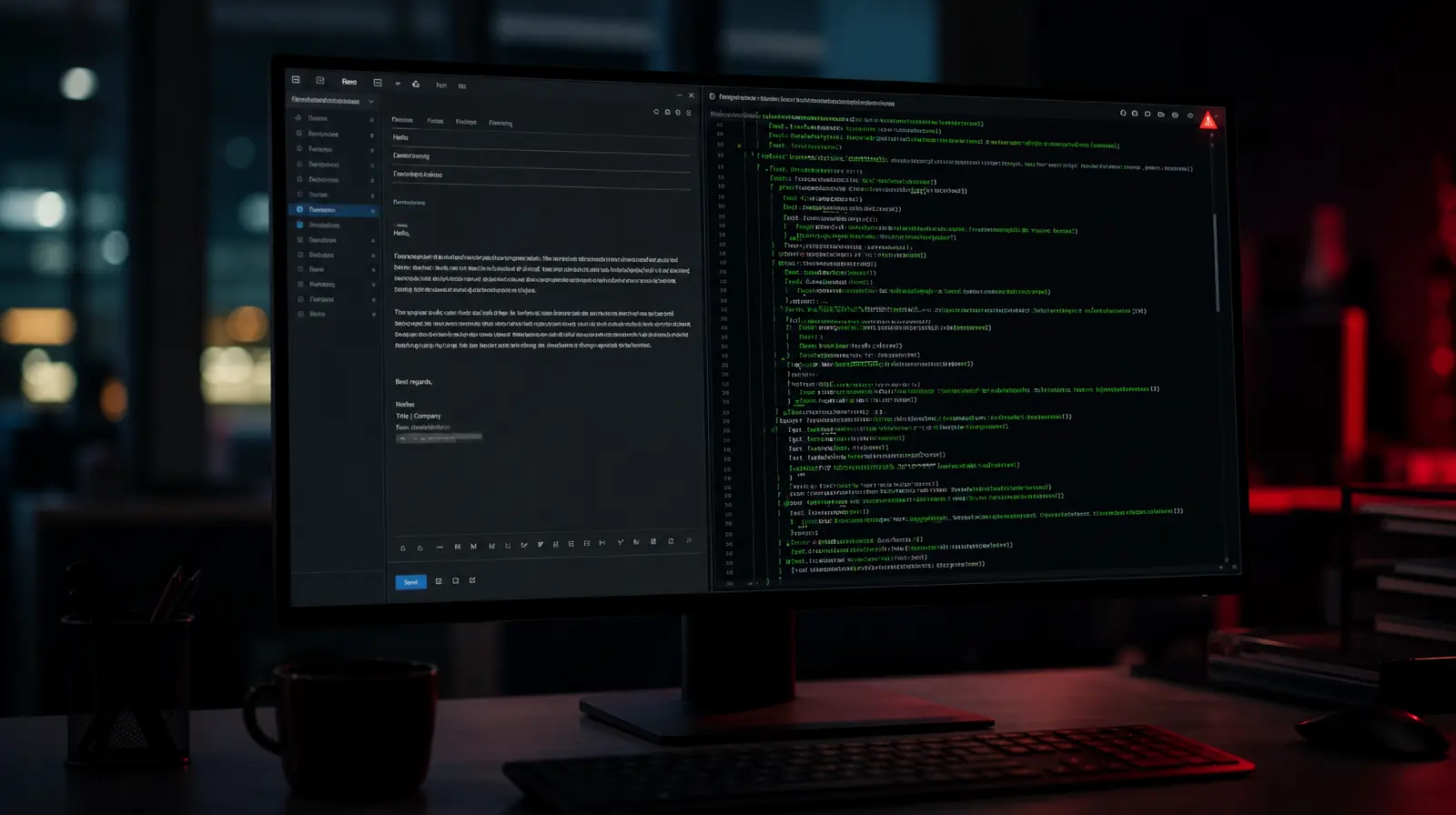
Three years ago, writing a believable phishing email took a criminal around 16 hours of research and drafting. IBM’s X-Force team found that AI has cut that time to approximately five minutes. The same email that once required patience and local knowledge can now be produced in the time it takes to make a coffee — personalised with your company’s name, your bank’s branding, and your finance manager’s job title scraped from LinkedIn.
The numbers bear this out. According to research published by Acronis and SecuredIntel, 82.6% of phishing emails now use AI in some form — up 53.5% from 2024. These emails work. AI-generated phishing achieves a 54% click-through rate, compared to 12% for human-written attempts. That is more than four times as likely to fool an employee. This is exactly why email filtering and phishing protection can no longer rely on traditional spam-detection rules alone.
Beyond the inbox, AI tools have automated the reconnaissance phase of attacks — the process of mapping a target before striking. Within minutes, an AI tool can identify every exposed entry point in your business: open network ports, software versions running on your servers, employee names, and which systems are public-facing. This used to take days. Now it happens before a human attacker has even been briefed. Automated AI-driven scanning reached 36,000 scans per second globally in 2025 — a 16.7% year-on-year increase — probing businesses around the clock.
Then there is deepfake fraud — AI-generated audio and video that impersonates real people. Criminals use voice cloning to mimic a CEO on a phone call authorising a payment transfer, or video deepfakes to pass the identity verification checks that banks and financial platforms use. Globally, deepfake fraud losses reached approximately $897 million by mid-2025, with $410 million occurring in just the first half of that year.
Why SA Businesses Are in the Crosshairs — AI Cybercrime South Africa at Scale
South Africa is not on the periphery of this threat. It is at the centre of it.
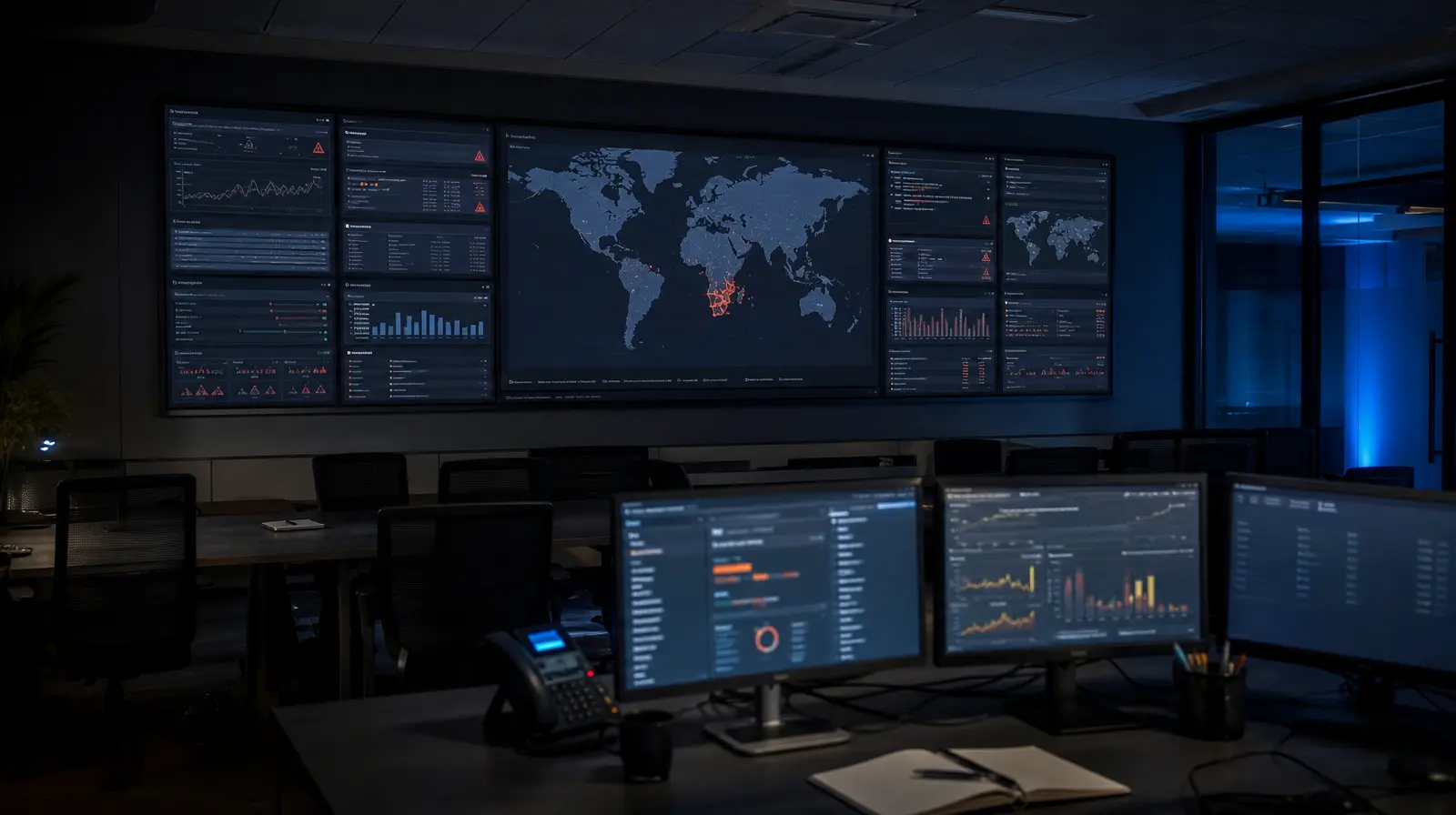
African organisations already face cyberattack volumes 60% higher than the global average, according to Check Point’s African Perspectives on Cyber Security Report 2025. South Africa specifically recorded 2,113 attacks per organisation per week as of mid-2025 — a 14% year-on-year increase. When you consider that AI has now automated the production and delivery of those attacks, the volume alone tells a serious story.
According to ESET’s H2 2024 Threat Report, South Africa is ranked number one in Africa for both ransomware and infostealer attacks — accounting for over 40% of all ransomware incidents and just under 35% of all infostealer cases on the continent. Phishing is the dominant entry method: ESET’s H2 2025 data shows phishing accounts for 45.7% of all detected threats in South Africa, well above the African continental average of 32.5%.
The financial damage is concrete. SABRIC’s 2024 Annual Crime Statistics reported 97,975 digital fraud incidents — an 86% increase from 2023 — with gross losses of R1.9 billion. Banking apps were the most exploited channel, accounting for 65.3% of incidents. More than half of all digital banking fraud cases recorded in the previous three years happened in 2024 alone.
Kaspersky blocked nearly 3 million phishing attempts in South Africa in the first half of 2025 — targeting one in five South African users. Malware in SA surged 123% in that same period, with banking trojans up 136% and infostealers up 122%. INTERPOL’s 2025 Africa Cyberthreat Assessment Report identifies AI-driven fraud as an emerging and urgent threat across the continent. The message from every credible data source is consistent: South Africa is a high-value target, and the volume and sophistication of attacks is accelerating.
The reason SA businesses are particularly exposed is not primarily technical — it is structural. Most small-to-medium businesses do not have a dedicated IT security function. There is no one monitoring for unusual activity at 2am. There is no automated system flagging when an employee’s credentials show up in a breach database. These gaps are exactly what AI-powered attacks are designed to exploit.
Three AI Attack Scenarios That Could Hit You
Understanding the mechanics of AI cybercrime South Africa means getting specific. These are not hypothetical edge cases — they are the three most active threat patterns hitting businesses right now.
The AI-Written Phishing Email Your Staff Won’t Recognise
Your staff member receives an email that uses their name, references your company correctly, mimics the visual design of a trusted supplier or bank, and carries no spelling errors. Traditional spam filters look for suspicious language, unusual senders, and formatting anomalies. An AI-written email has none of these. It passes the filter. It reads as legitimate.
The 2024 ransomware attack on South Africa’s National Health Laboratory Service began exactly this way — a phishing email opened the door. The NHLS, which handles diagnostic tests for approximately 80% of South Africa’s population, had 1.2 terabytes of data compromised, backups deleted, and ICT systems shut down across public health facilities. The organisation missed 25% of its annual targets as a direct result.
This is exactly the kind of threat a managed IT partner monitors for — not just at the inbox level, but across the entire network. If your business does not have someone watching for this, the first sign you will get is an email your staff member already clicked.
Automated Scanning That Finds the Unlocked Door
Every business has a digital footprint — a public website, email systems, remote access tools, cloud platforms, devices connected to the internet. AI-powered scanning tools map all of this in minutes, probing for any misconfiguration, outdated software, or exposed entry point. The attacker does not even need to be present for this phase. The AI does it automatically, reports the findings, and the human steps in only when there is a confirmed vulnerability to exploit.
CrowdStrike’s 2026 Global Threat Report recorded the fastest-ever cybercrime ‘breakout time’ — the time from initial access to moving laterally across a network — at just 27 seconds. The average dropped to 29 minutes, a 65% speed increase year-on-year. Once an attacker is inside, data exfiltration times have fallen from four hours in 2024 to just six minutes in 2025. By the time most businesses realise something is wrong, the data is already gone.
In January 2025, the South African Weather Service was hit by a RansomHub attack — a Russian-linked group — that took the organisation’s website offline for nearly a month, interrupted aviation, agricultural and marine weather services, and put over a century of climate data at risk. Like most ransomware incidents, it began with an exposed entry point that should have been found and closed before an attacker got there.
The Deepfake That Sounds Exactly Like Your CEO
Voice cloning technology can now reproduce a person’s voice from a few minutes of audio — a YouTube interview, a recorded presentation, a voicemail greeting. Criminals use this to phone a finance team member impersonating the CEO or CFO, requesting an urgent EFT to a new supplier. The voice is familiar. The instruction sounds real. The urgency makes questioning it feel disrespectful.
South Africa’s Financial Sector Conduct Authority has issued public warnings about deepfake and AI-impersonation schemes specifically targeting South African consumers and businesses — including voice clones and synthetic identities used to penetrate banking and insurance platforms. Globally, deepfake fraud attempts have surged 2,137% over the last three years. In 2024, a new deepfake-related attack was being attempted somewhere in the world every five minutes.
The defence against this is not just technology — it is process. Verification protocols for any out-of-channel payment instruction, combined with staff awareness training and multi-layered authentication, are the practical answers. A managed IT partner handles both the technology layer and the training — closing the gap between what the attacker is doing and what your team knows to look for.
How Modern Security Fights Back Against AI Cybercrime South Africa
The same capabilities that make AI dangerous in criminal hands — speed, pattern recognition, the ability to process enormous data volumes — are also being deployed defensively. And the evidence shows it works.
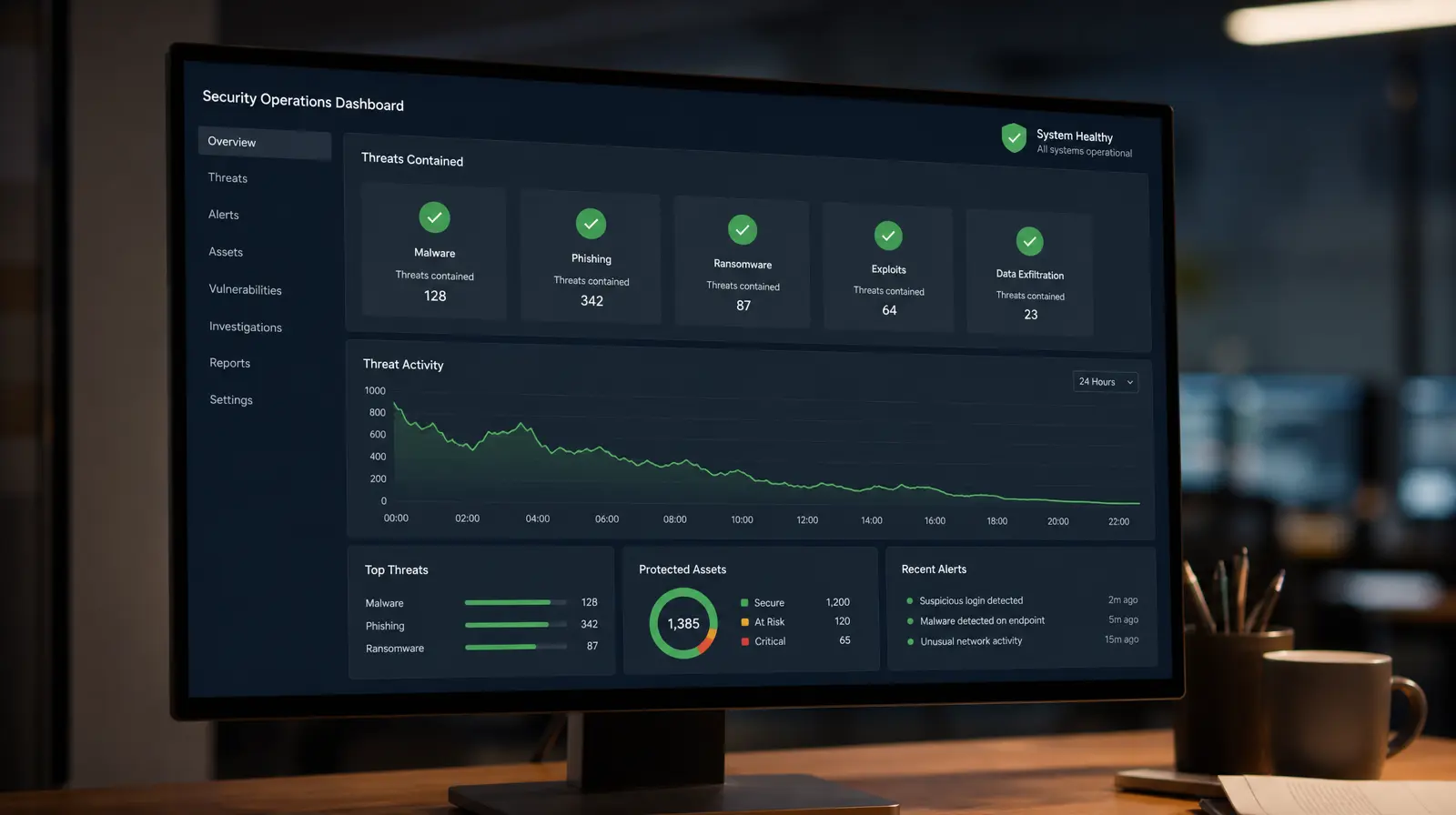
IBM’s 2025 Cost of a Data Breach Report found that South Africa’s average data breach cost fell 17% in 2025 — from R53.1 million to R44.1 million — nearly double the 9% global average decline. The report attributes this improvement directly to the adoption of AI-enabled security tools. South African organisations that extensively use AI and automation reported 32% lower breach costs. Globally, organisations using AI and security automation save an average of $1.9 million per breach compared to those with no AI use, and contain breaches 80–100 days faster.
The detection speed improvement is particularly significant. AI reduces the mean time to detect a breach from 204 days to 14 days — a 93% improvement. This matters because the longer an attacker is inside a network, the more damage they can do. At 204 days, an attacker has had months to map your systems, steal data, and establish persistence. At 14 days, the window is dramatically smaller. Microsoft’s AI-powered email filters now block 99.9% of sophisticated phishing threats — the kind of AI-written lures that bypass traditional filters entirely.
This is what modern managed security looks like in practice: AI monitoring your environment continuously, flagging anomalies the moment they appear, containing threats before they spread. It is not a human sitting at a screen watching dashboards — it is an automated layer running 24 hours a day that escalates to a human expert when something real is found. For a South African SME without an in-house security team, this is the difference between finding out about a breach from your bank and finding out before it becomes one. A security audit is the fastest way to know where you stand.
The threat environment is not going to become simpler. CrowdStrike’s 2026 Global Threat Report recorded an 89% increase in attacks by AI-enabled adversaries year-on-year. Phishing volume increased 202% in the same period. The pace of AI cybercrime South Africa faces is accelerating — but the defensive tools are accelerating too. The gap between protected businesses and unprotected ones is widening.
Is Your Business Protected Against AI-Powered Attacks?
AI has changed what a cyberattack looks like — and it has changed what security needs to look like in response. If your business is running on traditional IT security tools and relying on staff to spot suspicious emails, you are working with a playbook that was written before AI changed the game. Cybersecurity as a Service from Wired IT is built for exactly this threat environment — AI-powered monitoring, phishing protection, endpoint defence, and staff awareness training, managed for you so you can focus on running your business.
Request a Cybersecurity Assessment
Or if you want to talk through your specific risks first, get in touch with our team directly — no jargon, no obligation, just a clear picture of where you stand.